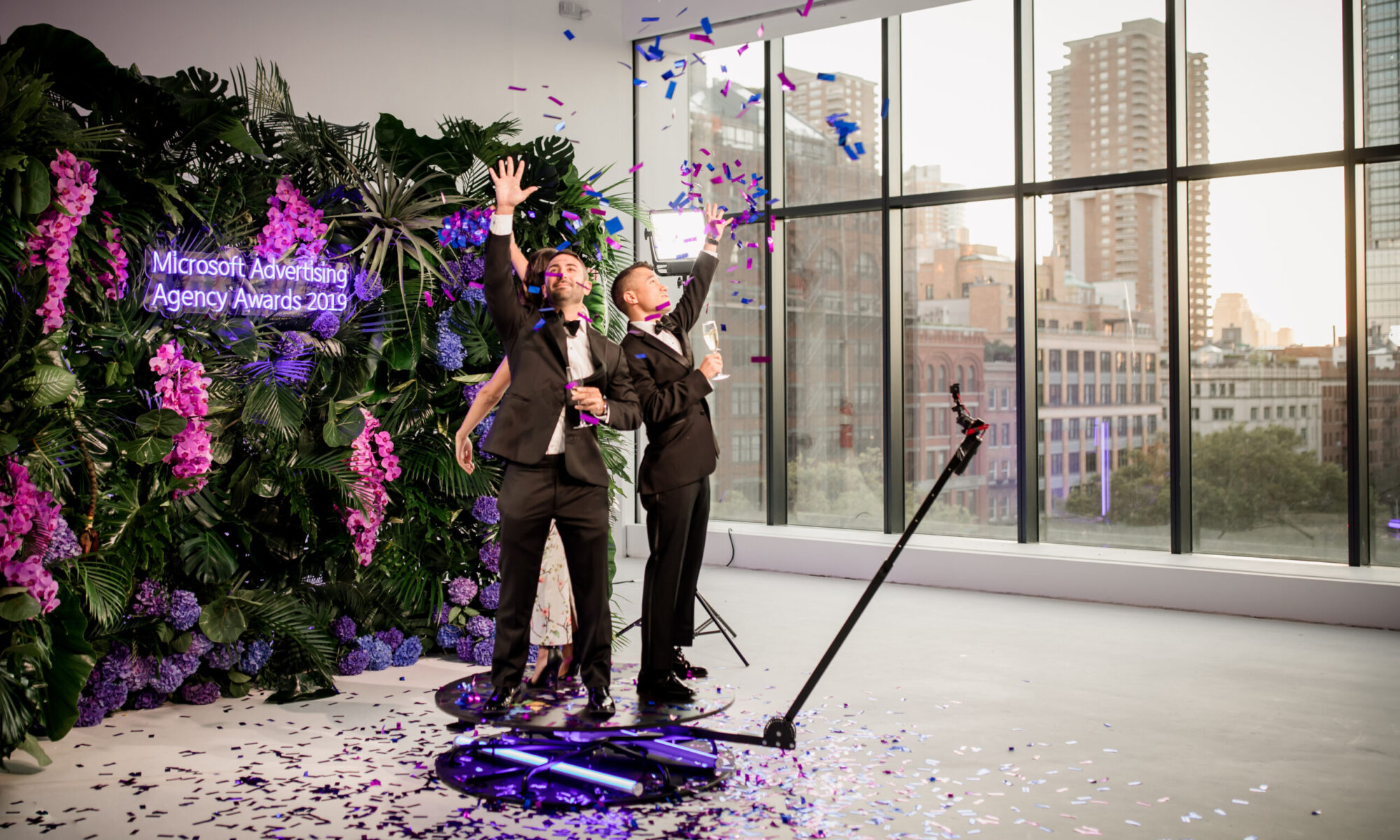

Let’s be honest: when “photo booth” lands on your event budget line item, your CFO’s eyebrow goes up. It sounds like entertainment. It sounds like fluff. It sounds like something that belongs at a wedding, not a Las Vegas trade show floor or an Austin SXSW activation.
But here’s what the data-driven CMOs already know: photo activations are one of the most efficient lead capture mechanisms in experiential marketing. The ROI isn’t hidden in “brand awareness” hand-waving. It’s sitting in your CRM, ready to be measured, attributed, and converted.
This guide breaks down exactly how to turn photo booth captures into qualified pipeline: and why the difference between a standard booth and a cinema robot (Glambot) matters more than you think.
📊 The Math That Changes Everything
Your sales team already knows this stat: converting a trade show lead costs 38% less than cold outreach. The question is how you capture those leads in the first place.
Badge scanners are passive. Gated content downloads feel transactional. But a photo activation? That’s an experience people want to participate in: and they willingly hand over contact information to receive their content.
Here’s the baseline math:
- A well-executed photo booth generates 5-6 qualified leads per hour
- A full-day activation at a trade show captures 40-60+ contacts
- If your sales team converts 5% of those contacts into customers with an average deal size of $10,000, each lead carries $500 in expected pipeline value
Run that through a 3-day event in Las Vegas or Los Angeles, and you’re looking at $75,000+ in pipeline value from a single activation. That’s not entertainment spend: that’s demand generation. For a broader framework on tracking event ROI metrics, reference HubSpot’s event marketing guide.
🔗 CRM Integration: From Capture to Pipeline in Real Time
The gap between “lead captured” and “lead in Salesforce” is where most event marketing ROI dies. Spreadsheets get lost. Manual entry takes weeks. By the time sales follows up, the prospect forgot they even visited your booth.
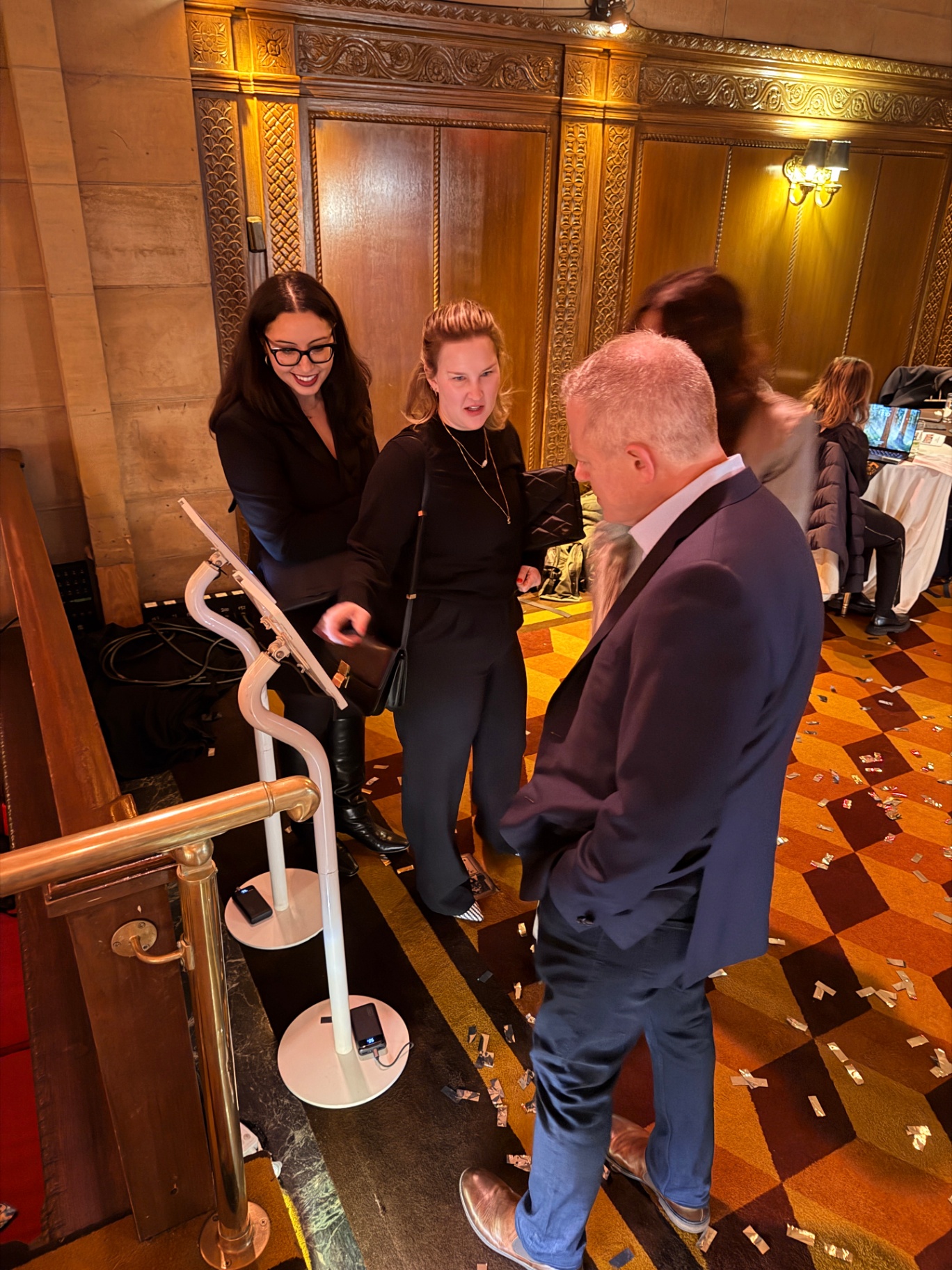
Modern photo booth platforms eliminate that gap entirely. Here’s what a proper integration stack looks like:
Real-Time Data Flow
- Guest enters email/phone to receive their photo or video
- Contact data flows directly into HubSpot, Salesforce, or Marketo
- Lead is tagged with event name, date, and activation type
- Automated nurture sequence triggers within minutes
Data Points You’re Actually Capturing
- Email address (verified through delivery confirmation)
- Phone number (for SMS follow-up)
- Opt-in consent (GDPR/CCPA compliant)
- Timestamp and session metadata
- Social sharing behavior
This isn’t hypothetical. Brands running activations at major trade shows in Las Vegas and Los Angeles are feeding leads directly into their ABM platforms and seeing first-touch attribution within 24 hours.
🎬 Standard Booths vs. Glambot: Different Tools, Different ROI Profiles
Not all photo activations deliver the same results. The choice between a standard photo booth and a cinema robot (Glambot) depends entirely on your objectives.
Standard Photo Booths
- Best for: High-volume lead capture, trade show floors, corporate events
- Throughput: 80-120+ guests per hour
- Content type: Branded stills, GIFs, boomerangs
- ROI driver: Volume of contacts captured
Standard booths excel at throughput. When you need to capture as many leads as possible at a packed convention center, a well-designed booth with fast turnaround wins. The content is shareable, the data capture is seamless, and the cost-per-lead stays low.
Glambot (Cinema Robot)
- Best for: Brand launches, premieres, VIP experiences, social amplification
- Throughput: 30-50 guests per hour (high-touch experience)
- Content type: Cinematic slow-motion video with dramatic camera movement
- ROI driver: Social reach, earned media value, premium brand positioning
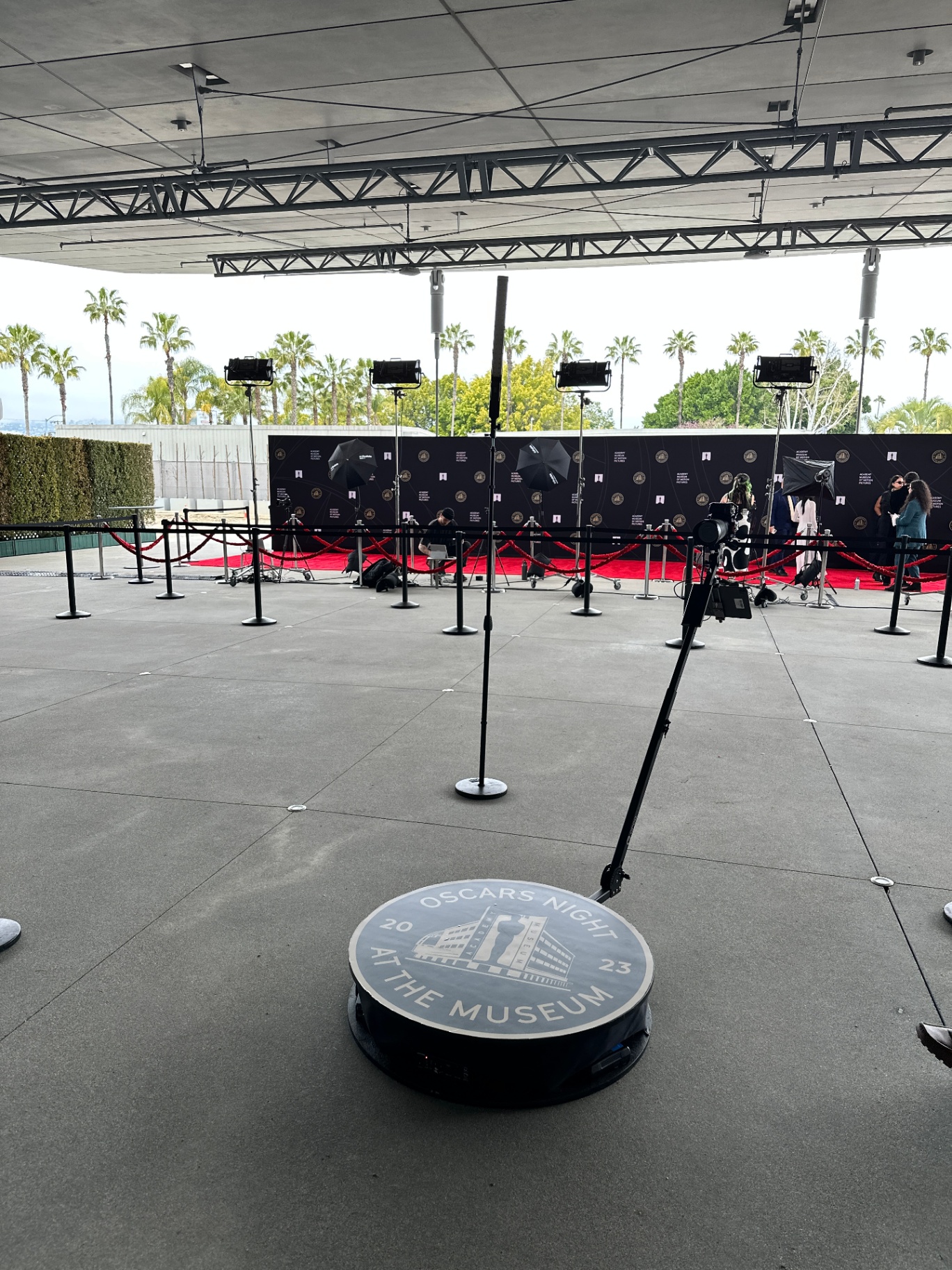
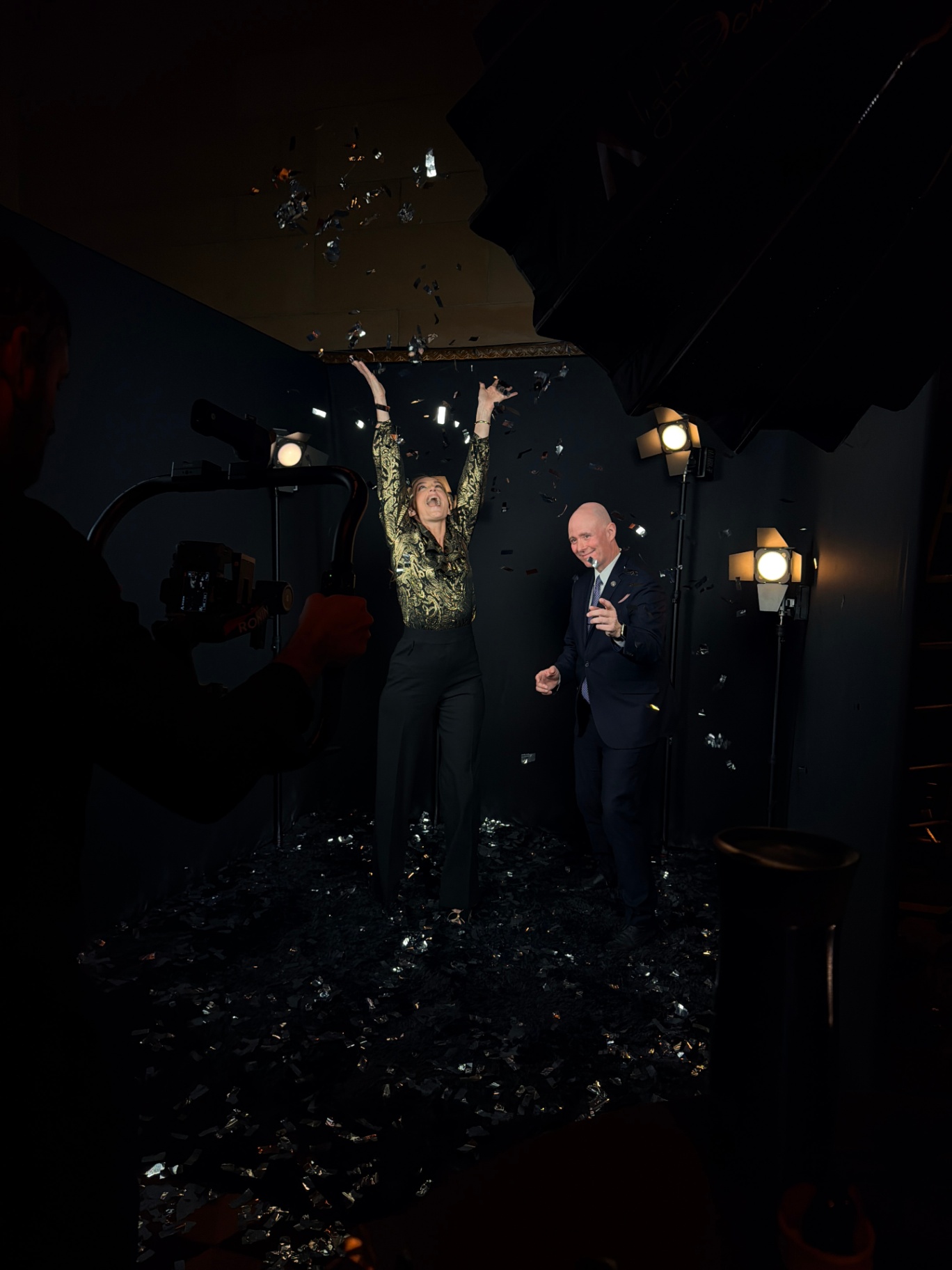
The Glambot creates content that looks like it belongs on a red carpet: because it does. When a guest shares that video, it doesn’t look like user-generated content. It looks like professional production with your brand attached. That’s earned media value you’d otherwise pay $5,000-10,000 to achieve through paid social.
The Strategic Play
Smart CMOs use both. Deploy standard booths for volume capture at trade show activations in Austin or Las Vegas. Reserve the Glambot for your hero moment: the product launch, the influencer activation, the VIP lounge. Different tools, complementary ROI.
📱 Social Amplification: Your Guests Become Your Media Buy
Here’s where photo booth ROI gets interesting for the performance marketing crowd.
Every branded photo or video that gets shared is essentially a micro-impression with your logo, messaging, and creative attached. Unlike paid social, these shares come with built-in social proof: a real person, at your event, endorsing your brand through their own network.
Calculating Social ROI
Compare your photo booth investment against equivalent paid reach:
| Metric | Paid Social | Photo Booth Activation |
|---|---|---|
| 50,000 impressions | $5,000-10,000 | Included in activation |
| Content authenticity | Low (ad creative) | High (UGC with brand) |
| Engagement rate | 1-2% | 15-25% (personal shares) |
| Lead capture | Requires landing page | Built into experience |
A single activation generating 200 shares, each reaching an average of 250 followers, delivers 50,000 impressions. Add your branded backdrop, overlay, and hashtag to every piece of content, and you’ve turned attendees into a distributed media network.

The Content Library Bonus
Request permission during photo booth participation to use attendee content in future marketing. Most participants agree: they’re getting professional content in exchange. You walk away with an authentic content library without expensive production shoots.
📈 Attribution Modeling: Connecting Impressions to Revenue
The most sophisticated marketing teams are connecting photo booth data all the way through the funnel. Here’s the attribution framework:
First-Touch Attribution
- Photo booth contact captured
- Lead tagged in CRM with source = “Event: [Event Name]”
- Initial nurture sequence deployed
Multi-Touch Attribution
- Social impressions tracked via UTM parameters on shared content
- Website visits from event-specific URLs
- Product page views correlated with photo booth participants
Closed-Loop Reporting
- Track which photo booth leads convert to opportunities
- Measure time-to-close vs. other lead sources
- Calculate true cost-per-qualified-lead (CPQL)
For brands running activations at major events like SXSW in Austin, this attribution model provides clear justification for experiential spend. You’re not hoping the CMO believes in “brand building”: you’re showing pipeline contribution in the same dashboard as every other demand gen channel.
🛠️ Implementation Checklist for Maximum Pipeline Impact
Ready to deploy photo activations as a real pipeline driver? Here’s your checklist:
Pre-Event
- Define lead capture fields (email, phone, company, job title)
- Set up CRM integration and automated tagging
- Design branded backdrop with logo placement for every frame
- Create custom overlay with campaign hashtag and URL
- Build post-event nurture sequence
During Event
- Staff booth with brand ambassadors who qualify leads verbally
- Capture supplementary data (company size, buying timeline)
- Monitor share velocity in real-time
- Collect content permissions
Post-Event
- Trigger nurture sequences within 24 hours
- Pass hot leads directly to sales with context
- Track social reach and earned media value
- Report pipeline contribution to leadership
💡 The Bottom Line for CMOs
Photo booths stopped being “just entertainment” the moment CRM integrations became standard. Today, they’re a lead capture mechanism with built-in social amplification and measurable attribution.
The ROI calculation is straightforward:
(Leads Captured × Conversion Rate × Average Deal Size) + Earned Media Value − Total Investment = True ROI
For most enterprise brands, that equation returns 3-5x on photo booth activations: often outperforming digital channels on a cost-per-qualified-lead basis.
Whether you’re planning a trade show presence in Las Vegas, a product launch in Los Angeles, or an experiential activation at SXSW in Austin, the question isn’t whether photo activations belong in your marketing mix. It’s how you’re going to measure and optimize them.
For more on building photo booths into your broader event strategy, check out our guide on brand activation photo booths and why corporate events need more than just photos.
Ready to build a photo activation strategy that actually shows up in your pipeline reports?