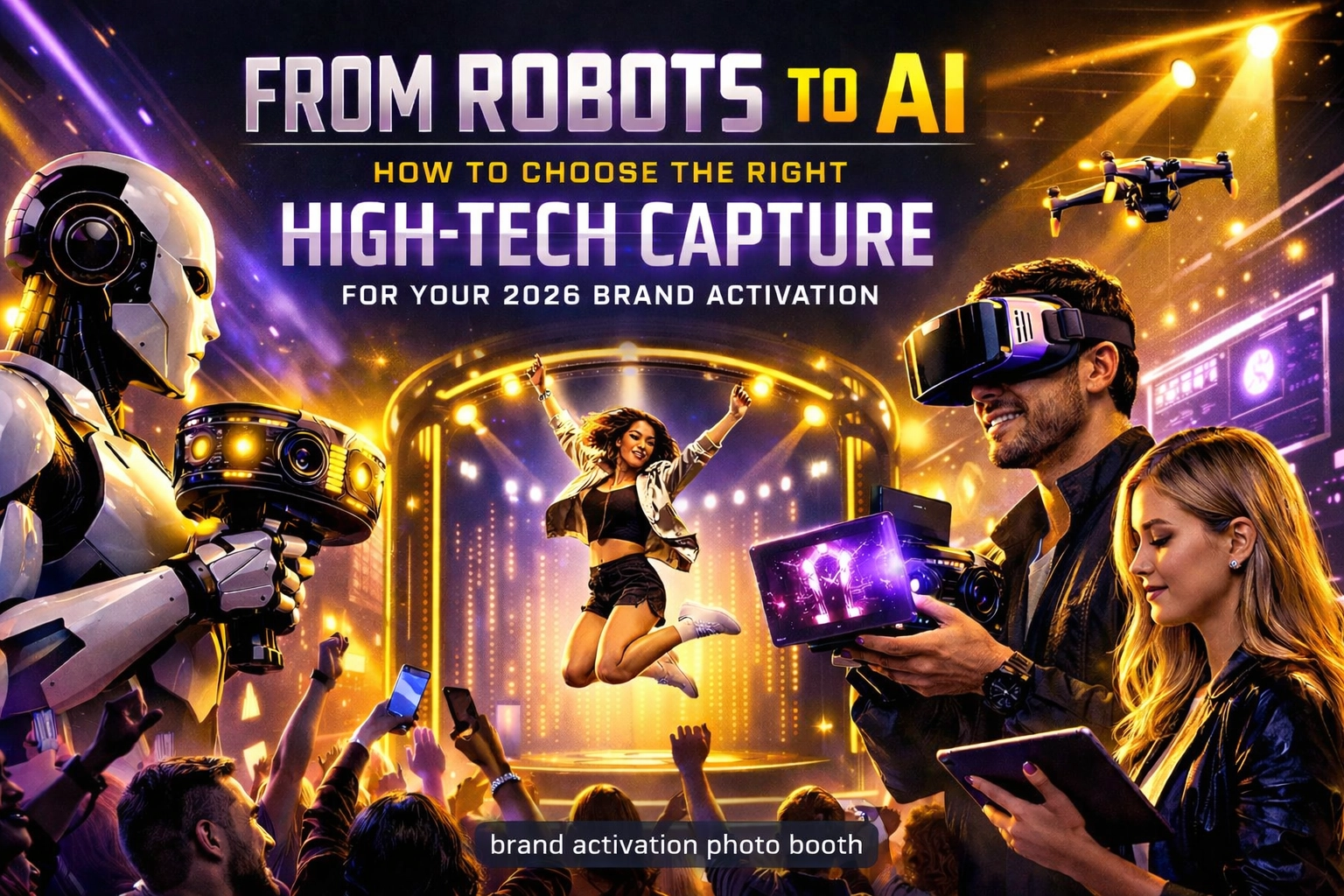
You’re planning a high-stakes brand activation and you know you need something more than a standard photo booth. Your team is weighing two very different capture technologies: cinema robots (Glambots) and generative AI photo booths. Both deliver next-level content, but they create entirely different experiences, and choosing the wrong one can mean missing your KPIs.
This is the choice brands are navigating in 2026. The good news? Once you understand the vibe, output, and logistics of each, the decision becomes clear.
What Are We Actually Comparing?
Before we get into the details, let’s define what we’re talking about.
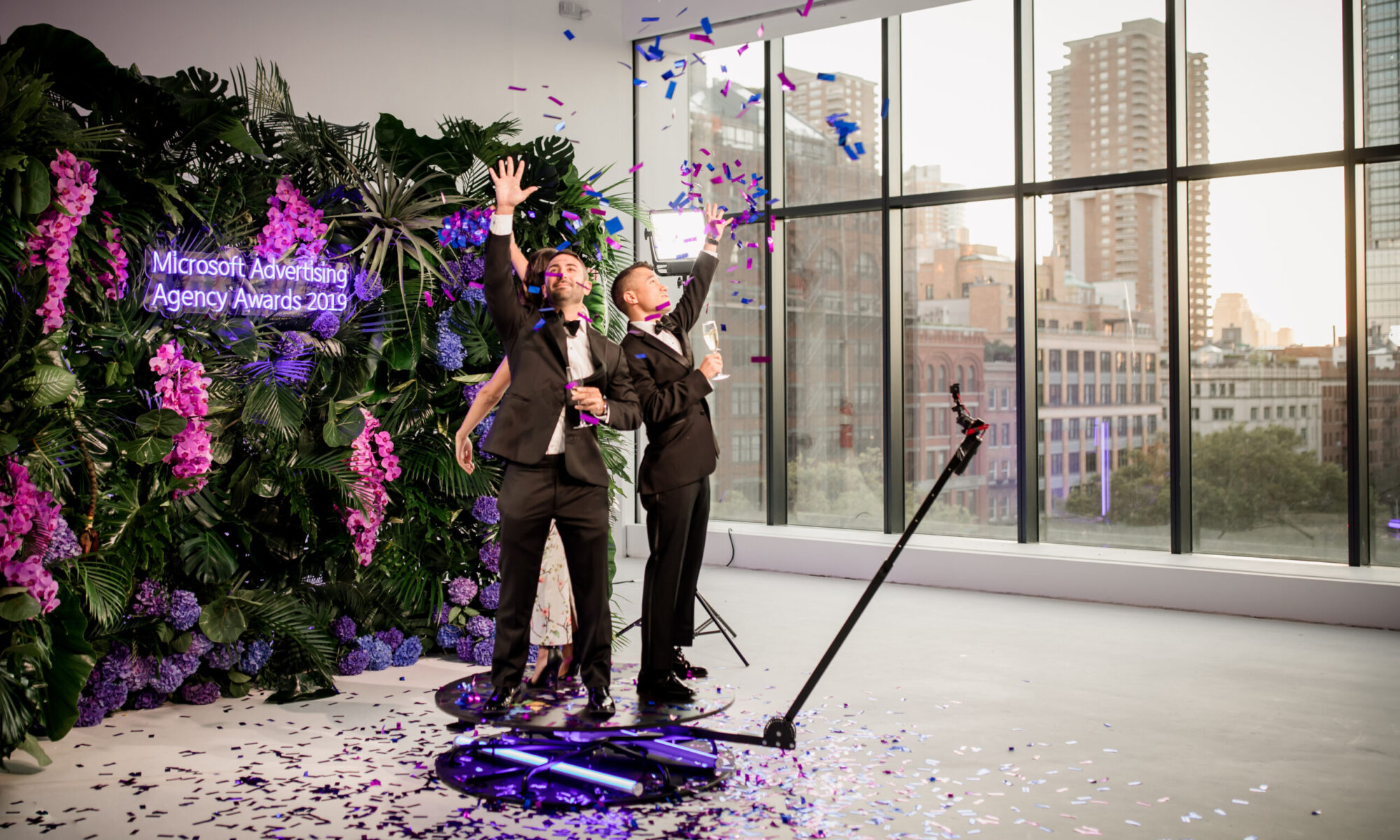
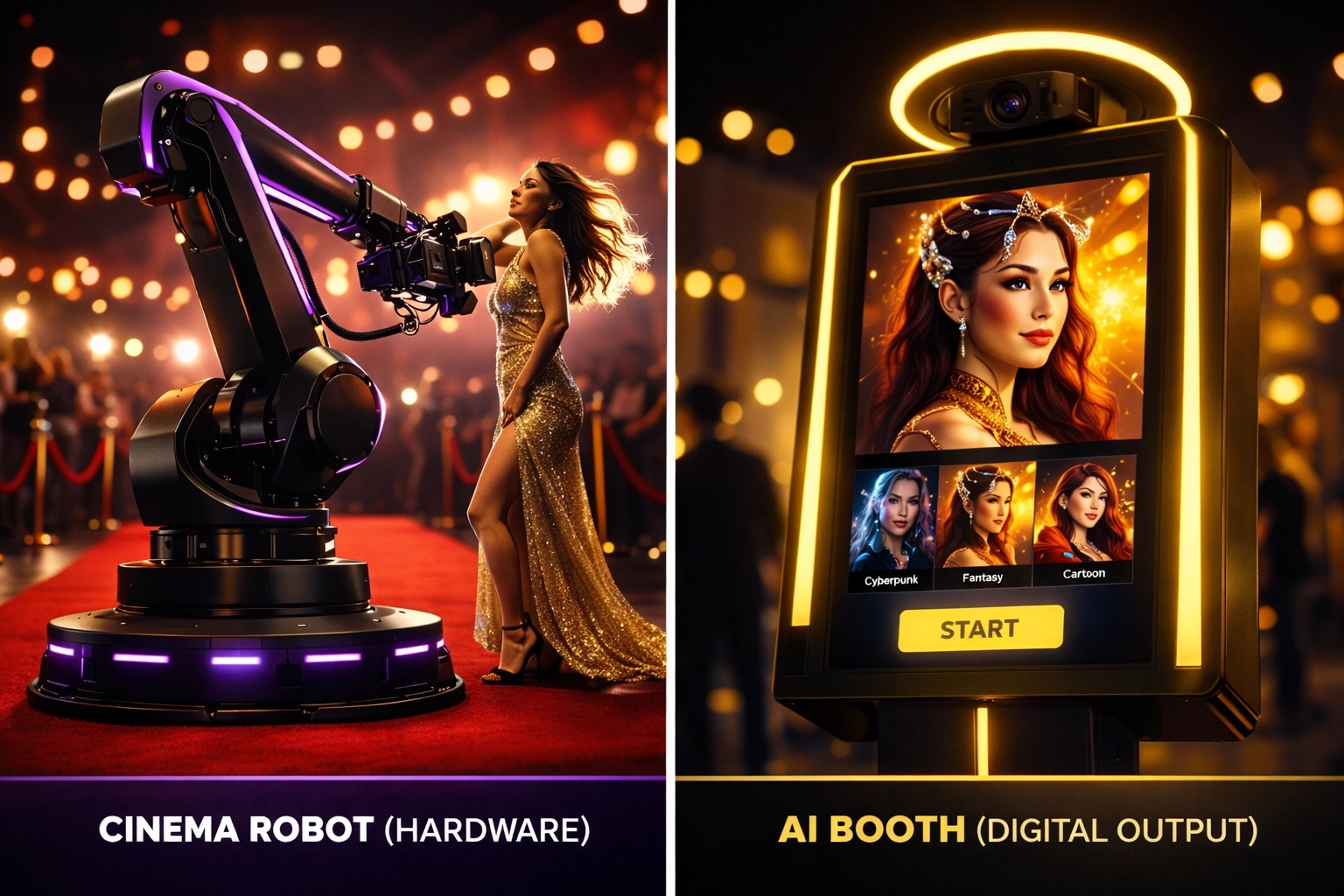
Cinema robots (commonly called Glambots) are motorized camera arms that capture high-speed, cinematic slow-motion video. Think red carpet vibes, smooth, sweeping movements that make every guest look like a movie star. The output is a polished video clip, typically 3-5 seconds, optimized for Instagram Reels and TikTok. For a quick “this is the trend” reference, see this red carpet-style Glambot moment making the rounds: https://www.tiktok.com/tag/glambot
Learn more about cinema robot logistics and pricing here.
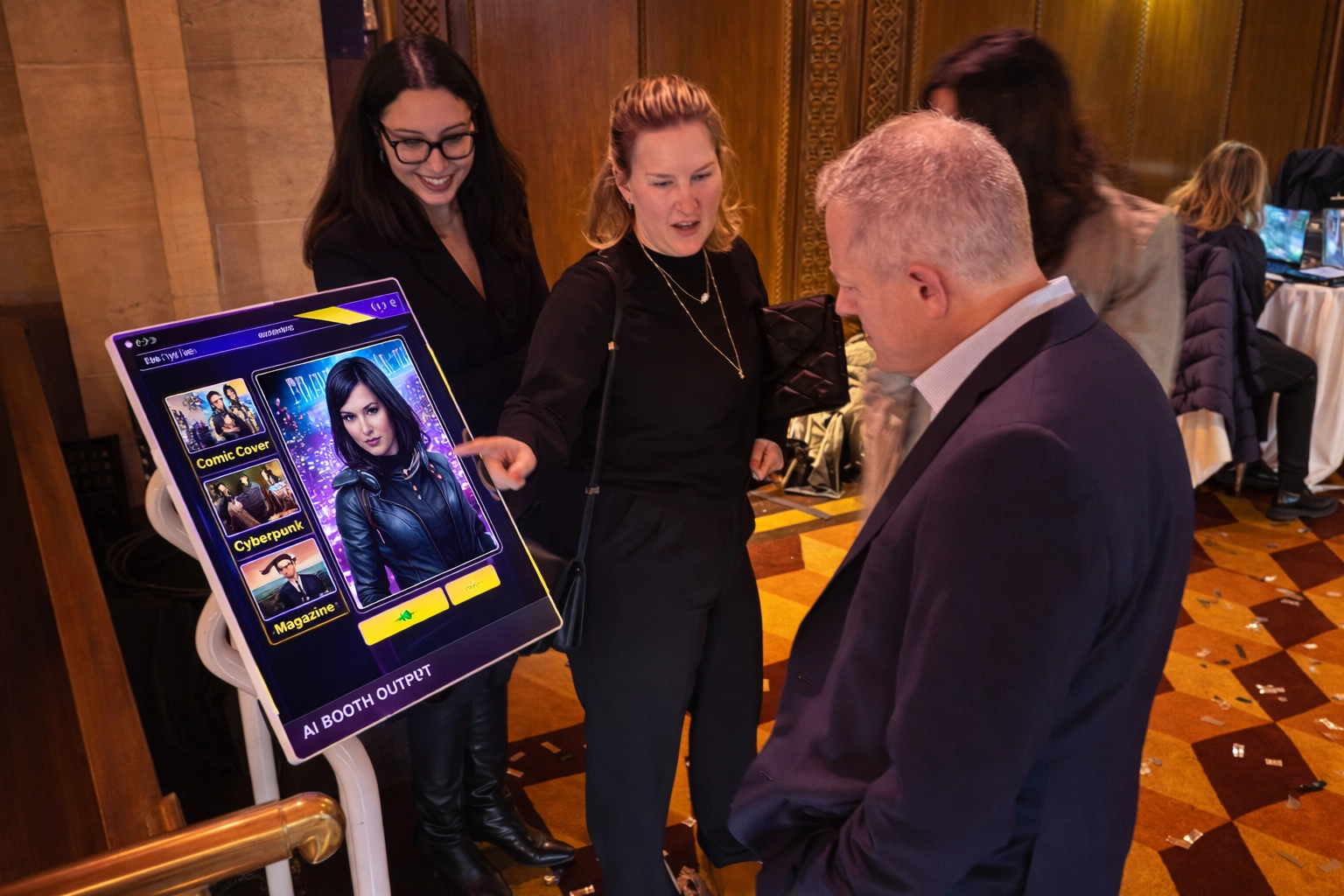
Generative AI photo booths use machine learning to transform standard portraits into custom digital art. Guests step in front of the camera, capture a photo, and within seconds, AI generates a branded visual, whether that’s a comic book cover, magazine spread, or futuristic sci-fi scene. The output is a static image with creative flexibility that standard photography can’t touch.
Explore how AI-powered activations work in our full guide.
Both technologies create shareable, high-engagement content. But they deliver completely different brand stories.
Vibe & Output: Cinema Glamour vs. Digital Creativity
The biggest difference between cinema robots and AI booths is the emotional tone they create, and the type of content guests walk away with.
Cinema Robots = Red Carpet Energy
Cinema robots deliver Hollywood glamour. The experience is theatrical. Guests step onto a mark, strike a pose, and the robotic arm swoeps around them in a choreographed arc. The result is a slow-motion video that feels like a movie trailer.
Best for:
- Premieres, galas, and luxury brand launches
- Activations where the brand wants to elevate guests into VIP status
- Events targeting Gen Z and Millennials who value cinematic, TikTok-native content
- Brands like beauty, fashion, automotive, and spirits
The vibe is aspirational. You’re not just taking a photo, you’re stepping into the spotlight.
Generative AI = Creative Playground
AI photo booths deliver imaginative transformation. The experience is interactive and surprising. Guests see themselves reimagined as superheroes, vintage magazine covers, or neon-lit cyberpunk characters. The AI does the creative heavy lifting, producing results that feel custom-designed for each person.
Best for:
- Tech conferences, product launches, and experiential pop-ups
- Brands that want to showcase innovation and creativity
- Activations where customization and personalization drive engagement
- Industries like gaming, tech, CPG, and media
The vibe is playful and futuristic. You’re co-creating something unique with the technology.
Both formats are designed for social sharing, but the tone differs. Cinema robots create status content (“Look how cool I look”). AI booths create creative content (“Look what this tech made me into”).
Footprint & Logistics: Space, Setup, and Staffing
If you’re working with limited square footage or a tight timeline, logistics matter as much as creative output.
Cinema Robots Require Real Estate
Cinema robots need space. A typical setup requires:
- 10×10 feet minimum for the camera path and backdrop
- Additional clearance for the robotic arm’s full range of motion
- Controlled lighting to achieve that signature cinematic look
Setup is more involved. Expect 2-3 hours for calibration, lighting checks, and test runs. You’ll also need dedicated power and ideally a backdrop or branded environment that complements the premium feel.
Staffing: Plan for 2 trained operators, one to manage the technical setup and another to coach guests on posing and timing.
AI Booths Are Compact and Portable
Generative AI setups are space-efficient. A standard configuration fits into:
- 6×8 feet including the camera station and user interface
- Minimal lighting requirements (works in ambient or booth-lit setups)
- Plug-and-play power (standard outlet)
Setup takes 60-90 minutes. The tech is self-contained, and because the magic happens in software, there’s less physical calibration.
Staffing: You can run an AI booth with 1 operator, especially if the interface is user-friendly and guests can self-navigate the AI prompts.
Bottom line: If you’re activating at a trade show booth in Las Vegas with limited floor space, AI wins on footprint. If you’re designing a standalone experiential moment at a Los Angeles premiere, the cinema robot’s larger footprint pays off in production value.
Throughput: How Many People Can You Capture Per Hour?
Throughput directly impacts your activation’s ROI. More captures = more impressions, more leads, and more content.
Cinema Robots: Premium, Not High-Volume
Cinema robots deliver 15-25 captures per hour under ideal conditions. Here’s why:
- Each guest interaction takes 2-3 minutes (posing, coaching, capture, review)
- The robotic arm needs reset time between takes
- Guests often want multiple attempts to nail the perfect pose
The experience is inherently one-at-a-time. You can’t rush it without sacrificing the premium feel.
Strategy tip: If throughput is critical, pair the cinema robot with a secondary activation (like a standard photo booth or roaming photographer) to keep lines moving and capture more attendees.
AI Booths: Built for Scale
AI booths can process 40-60 captures per hour, sometimes more. Here’s the breakdown:
- Guest capture time: 30-45 seconds
- AI processing time: 10-20 seconds
- Total interaction: Under 90 seconds from start to finish
Because the AI handles the creative transformation, there’s no manual editing or operator bottleneck. Guests can also self-serve if the interface is intuitive, which speeds things up even more.
Strategy tip: For high-traffic activations, think Austin during SXSW or a trade show booth, AI booths maximize your lead capture without sacrificing engagement quality.
Viral Potential: What Gets Shared?
Both technologies are built for social, but they trigger different sharing behaviors.
Cinema Robots: Status-Driven Sharing
Cinema robot content performs well on Instagram Reels, TikTok, and Stories. The slow-motion format is inherently eye-catching, and the cinematic quality makes guests feel like influencers.
Sharing triggers:
- Ego boost – “I look amazing in this”
- Event exclusivity – “I was at this premiere/launch”
- Production quality – The polished output feels worth posting
Expect 60-80% of guests to share if the content is instantly deliverable via QR code or SMS.
AI Booths: Curiosity-Driven Sharing
AI-generated content thrives on novelty and personalization. Guests share because the result is unexpected and feels custom-made. The “wow, look what the AI did” factor drives engagement.
Sharing triggers:
- Surprise element – “I didn’t expect this”
- Personalization – “This looks like me, but cooler”
- Conversation starter – Friends comment and ask how it was made
Sharing rates hit 70-85% when the AI output is well-branded and guests can choose their favorite style from multiple generated options.
According to recent event tech insights, AI-driven activations generate 40% more social impressions than traditional photo experiences because the content feels novel and algorithm-friendly. Generative AI is also already a mainstream conversation in major tech media—expect that to keep shaping what your attendees “get” instantly. Here’s a TechCrunch example of how AI is being treated as a full-on event ecosystem: https://techcrunch.com/tag/tc-sessions-ai/

Which Technology Is Right for Your Activation?
Here’s the decision framework:
Choose a Cinema Robot If:
- Your brand identity is luxury, premium, or aspirational
- You’re activating at a gala, premiere, or VIP event
- You want video content optimized for Reels and TikTok
- You have 10×10+ feet of space and can control lighting
- Throughput under 25/hour is acceptable
- Your audience expects a red carpet experience
Choose a Generative AI Booth If:
- Your brand is innovative, playful, or tech-forward
- You’re activating at a trade show, conference, or pop-up
- You want static images with creative flexibility
- You’re working with limited footprint (under 8×8 feet)
- You need high throughput (40+ captures/hour)
- Your audience values personalization and novelty
Or Combine Both
Some activations deploy both technologies in a two-stage experience. Guests start with a quick AI portrait, then VIPs or contest winners get upgraded to the cinema robot for a premium cinematic moment. This hybrid approach maximizes throughput while preserving the aspirational vibe for select attendees.
The Bottom Line
Cinema robots and generative AI booths both deliver high-engagement, shareable content: but they tell different brand stories. Cinema robots create Hollywood glamour. AI booths create digital creativity. Your choice depends on your brand’s vibe, your event’s logistics, and your throughput goals.
The brands winning in 2026 are the ones that match the technology to the experience, not the other way around. Choose the tool that amplifies your story, fits your footprint, and gets your content in front of the right audience.
Ready to design your next activation? Whether you’re leaning toward cinematic slow-motion or AI-powered transformation, Studio Z builds custom solutions that fit your brand, your space, and your KPIs. Let’s talk about what makes sense for your event.
5 Replies to “From Robots to AI: How to Choose the Right High-Tech Event Capture for Your 2026 Brand Activation”